
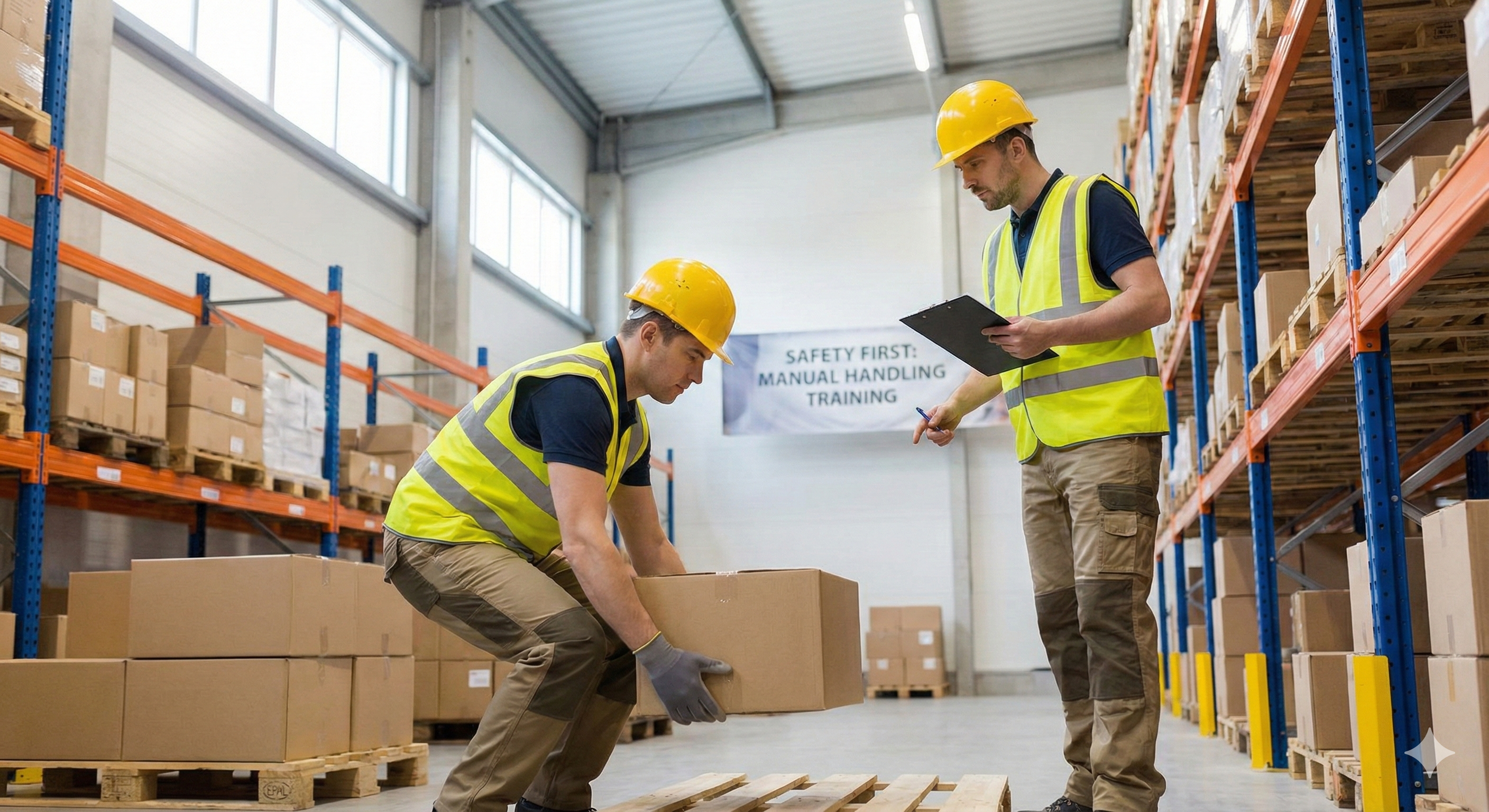
Manual Handling Best Practices
Manual Handling Best Practices: A Complete Guide for Irish Workplaces
Manual handling injuries remain one of the leading causes of workplace accidents in Ireland, accounting for over 30% of all reported injuries to the Health and Safety Authority (HSA). Whether you're lifting boxes in a warehouse, moving patients in healthcare, or handling equipment on a construction site, proper manual handling techniques are essential for protecting your health and ensuring workplace compliance.
What Is Manual Handling?
Manual handling refers to any activity that involves lifting, lowering, pushing, pulling, carrying, or moving loads by hand or bodily force. Under the Safety, Health and Welfare at Work (General Application) Regulations 2007, Irish employers have a legal duty to assess manual handling risks and implement appropriate control measures.
The TILE Assessment Framework
Before any manual handling task, conduct a TILE assessment to identify potential risks:
Task
How far does the load need to be moved?
Does the task involve twisting, stooping, or reaching?
How frequently is the task repeated?
Is there adequate rest time between lifts?
Individual
Does the person have any health conditions that could be affected?
Has the individual received appropriate training?
Are they physically capable of performing the task safely?
Is suitable PPE available and being worn?
Load
How heavy is the load?
Is it bulky, unstable, or difficult to grip?
Are the contents likely to shift?
Does it have sharp edges or extreme temperatures?
Environment
Is the floor surface uneven, slippery, or cluttered?
Is there adequate lighting?
Are there space constraints or obstacles?
What are the temperature and humidity conditions?
Safe Lifting Technique: The 8-Point System
When manual handling cannot be avoided, follow these essential steps:
1. Plan the Lift
Think about the task before you begin. Where is the load going? Do you need help? Is the pathway clear? Can you use mechanical aids?
2. Position Your Feet
Stand with your feet hip-width apart, with one foot slightly in front of the other. This provides a stable base and allows for weight transfer during the lift.
3. Adopt a Good Posture
Bend your knees and hips, not your back. Keep your back straight and maintain its natural curve. Your shoulders should be level and facing the same direction as your hips.
4. Get a Secure Grip
Use the whole hand rather than just fingertips. Where possible, grip the load at opposite corners for better control. Ensure your grip is firm before lifting.
5. Keep the Load Close
Hold the load as close to your body as possible. The further the load is from your spine, the greater the stress on your lower back.
6. Lift Smoothly
Lift using your leg muscles, not your back. Keep the movement smooth and controlled—never jerk or snatch the load.
7. Move Your Feet
Turn by moving your feet rather than twisting your spine. Take small steps and keep the load close throughout the movement.
8. Put Down, Then Adjust
Lower the load by bending your knees. Once the load is down, you can slide it into the exact position required.
Common Manual Handling Hazards to Avoid
Twisting While Lifting
Rotating your spine under load is one of the most common causes of back injuries. Always turn with your feet, keeping your shoulders and hips aligned.
Overreaching
Stretching to lift or place loads puts excessive strain on your back and shoulders. Get closer to the load or use step platforms where necessary.
Rushing
Time pressure leads to shortcuts and poor technique. Allow adequate time for manual handling tasks and never sacrifice safety for speed.
Failing to Warm Up
Cold muscles are more susceptible to injury. If your work involves repetitive manual handling, gentle stretching before your shift can reduce injury risk.
Ignoring Early Warning Signs
Minor aches and discomfort can escalate into serious injuries if ignored. Report any pain or difficulty to your supervisor immediately.
Employer Responsibilities Under Irish Law
The Safety, Health and Welfare at Work Act 2005 requires employers to:
Identify manual handling hazards through risk assessment
Eliminate or reduce manual handling risks where reasonably practicable
Provide mechanical aids and equipment where appropriate
Deliver adequate training and information to employees
Monitor and review manual handling procedures regularly
Failure to comply with these obligations can result in prosecution and significant fines.
The Importance of Professional Training
While this guide provides essential information, it cannot replace hands-on training with a qualified instructor. At Usafety, we've certified over 10,000 employees across Ireland in manual handling and people handling techniques. Our QQI Level 6 certified courses combine theoretical knowledge with practical, supervised practice—ensuring participants not only understand the principles but can apply them correctly in their specific workplace environment.
Proper manual handling training includes:
Practical demonstrations and supervised practice
Assessment of individual technique
Workplace-specific scenarios and solutions
Understanding of relevant legislation
Recognition of risk factors and warning signs
Reducing Manual Handling Through Good Design
The most effective way to prevent manual handling injuries is to eliminate or reduce the need for manual handling in the first place. Consider:
Mechanical aids: Trolleys, hoists, conveyors, and pallet trucks
Workplace layout: Position frequently handled items at waist height
Packaging design: Reduce load weights or provide better handles
Team lifting: For loads that cannot be handled by one person
Job rotation: Vary tasks to reduce repetitive strain
Key Takeaways
Always assess the task, individual, load, and environment before lifting
Plan your lift and clear the pathway before you begin
Bend your knees, not your back, and keep the load close to your body
Never twist while carrying a load—turn with your feet
Report any pain or difficulty immediately
Seek proper training to reinforce good technique and stay compliant
Need manual handling training for your team? [Contact us](/contact) to discuss your requirements or call 091 485 580 for same-week availability across Ireland.
Need Safety Training?
Usafety provides QQI-certified health and safety training for businesses across Ireland. Get in touch to discuss your requirements.